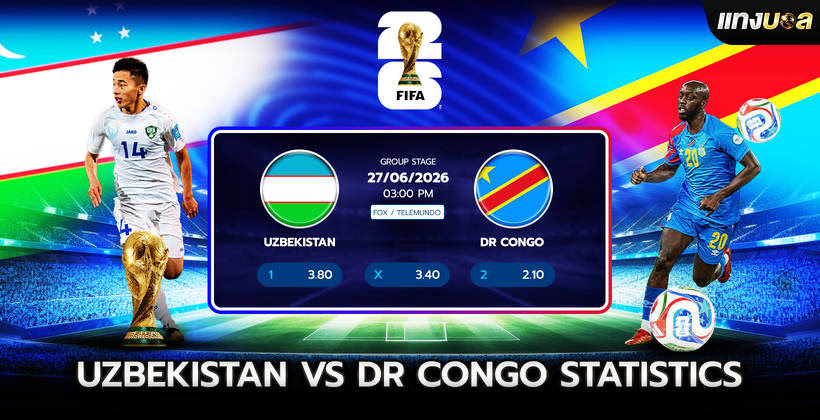
Uzbekistan's current World Cup standings and performance metrics are listed below.
- Group Position: Uzbekistan sits in Group K alongside Portugal, DR Congo, and Colombia, marking the nation's first-ever FIFA World Cup appearance in the tournament's history.
- FIFA Ranking: Uzbekistan entered 2026 ranked 63rd in the FIFA rankings, reflecting consistent upward momentum built on dominant AFC qualifying performances and regional tournament results.
- World Cup Group K Position: Uzbekistan enters Group K as the fourth-ranked side, with markets reflecting the difficulty of progressing past Portugal and DR Congo in the group stage.
- Defensive Record: Uzbekistan conceded 7 goals across 10 AFC qualifying matches, recording a strong positive goal difference built on structured defensive organization and midfield compactness.
- Attacking Output: Uzbekistan's attacking threat remained consistent throughout qualifying, with Eldor Shomurodov, Jasur Yakhshiboev, and Otabek Shukurov contributing goals across multiple fixtures.
- Tournament Pedigree: Uzbekistan reached the AFC Asian Cup quarterfinals in 2023, demonstrating the ability to compete and progress at the continental tournament level against stronger Asian opposition.
- Top Scorer: Eldor Shomurodov leads Uzbekistan's scoring record heading into the tournament, providing the primary central attacking threat across the national team's structured system.
How has Uzbekistan's National Football Team Performed Recently?
Uzbekistan's national football team's recent form across the 2025 to 2026 window reflects growing competitive consistency with dominant qualifying results and credible friendly performances. The squad secured AFC qualification through structured possession play and clinical attacking efficiency, finishing the campaign with a strong positive goal difference across 10 matches. Across the last 5 matches, Uzbekistan recorded 2 wins, 2 draws, and 1 loss, demonstrating competitive resilience against Asian opposition of varying quality levels. The standout result came in the 3 to 1 win against the United Arab Emirates (UAE) in November 2025, confirming the team's capacity to produce dominant performances against physically imposing regional opposition. Head coach Srecko Katanec continues to implement a structured 4-3-3 system that prioritizes possession control and rapid transitional play through central attacking channels. Uzbekistan enters the 2026 World Cup as a historic first-time participant, ranked 63rd in the FIFA rankings with genuine momentum from the qualifying campaign.
What Tactical Formations are Uzbekistan Expected to use in this Match?
Tactical formations that Uzbekistan is expected to use in this match are listed below.
- 4-3-3 (Primary Formation): Katanec's primary system deploys a 4-3-3 built around a technically proficient midfield trio that controls possession and creates attacking transitions through central channels. Eldor Shomurodov leads the forward line, combining physical presence and clinical finishing to exploit space created by wide attackers Jasur Yakhshiboev and Otabek Shukurov.
- 4-2-3-1 (Defensive Alternative): Uzbekistan deploys a 4-2-3-1 in matches where absorbing pressure and limiting central space becomes the tactical priority, dropping into a structured mid-block to frustrate physically dominant opposition. The double pivot screens the defensive line while the attacking midfielder connects midfield and forward phases through quick combination play.
- 3-5-2 (Attacking Variant): Uzbekistan shifts to a 3-5-2 in fixtures where additional midfield presence and width are required, pushing wing-backs higher to create overloads in wide attacking channels. The system provides additional bodies in midfield against DR Congo's physical presence while maintaining two central forwards for direct transition moments.
- Tactical Flexibility (Common Approach): Uzbekistan switches formations based on match context, pressing higher in the opening phases before settling into controlled possession-based positioning. The team's attacking structure centers on central channel exploitation, technical combination play, and disciplined defensive organization that limits high-volume scoring opportunities against physically superior opposition.
What Makes Uzbekistan a Dangerous Opponent for DR Congo?
Uzbekistan presents a genuine threat to DR Congo through technical quality, structured possession play, and clinical transitional attacking output. Eldor Shomurodov's physical presence and finishing ability in central positions create consistent threats against DR Congo's defensive line across 90 minutes. Set-piece delivery from Jasur Yakhshiboev provides an additional route to goal, targeting physical runners in the box during dead-ball situations. Katanec's organized pressing phases force errors from opponents attempting to build out from the back. Uzbekistan's technical quality and tactical discipline make the team a more dangerous opponent than market odds and tournament inexperience suggest.
Does Uzbekistan Perform Well in Knockout Stage International Matches?
Yes, Uzbekistan performs competitively in high-pressure knockout stage international matches. The 2023 AFC Asian Cup quarterfinal appearance confirmed the team's capacity to manage high-stakes fixtures through disciplined defensive organization and clinical attacking moments against stronger opposition. Uzbekistan's squad carries experience from knockout competition in the AFC Champions League through club representatives, adding familiarity with elimination-format pressure to the national team environment. The squad's mental composure under Katanec's structured system translates effectively into knockout scenarios, where tactical discipline and set-piece efficiency carry greater decisive weight. Uzbekistan's knockout stage record at the continental level provides a credible foundation for managing the pressure of World Cup group stage elimination scenarios.
Which Players are Currently on Uzbekistan's National Team Roster?
The players currently on Uzbekistan's national team roster are listed below.
- Otkir Yusupov (Pakhtakor, Goalkeeper): Yusupov performs as one of Uzbekistan’s primary goalkeepers, providing shot-stopping consistency and reliable command of the penalty area. Yusupov contributes stability in high-pressure international matches through strong positioning and reflex saves.
- Eldorbek Suyunov (Pakhtakor, Goalkeeper): Suyunov contributes veteran experience and depth within the national team goalkeeping unit. Suyunov adds composure and organizational leadership from the back.
- Abduvakhid Nematov (Nasaf, Goalkeeper): Nematov provides youthful reflex-based goalkeeping ability and strong shot anticipation. Nematov strengthens long-term depth in Uzbekistan’s goalkeeper pool.
- Abdukodir Khusanov (Lens, Center-Back): Khusanov delivers elite defensive quality with pace, strength, and aggressive duels in central defense. Khusanov elevates Uzbekistan’s backline through top-level European club experience.
- Rustamjon Ashurmatov (Rubin Kazan, Center-Back): Ashurmatov provides defensive structure, aerial dominance, and consistent marking in central defense. Ashurmatov ensures stability through disciplined positioning.
- Husniddin Aliqulov (Nasaf, Center-Back): Aliqulov adds physical aggression and strong defensive timing in tackles and duels. Aliqulov strengthens domestic-based defensive depth for the national team.
- Dostonbek Tursunov (Pakhtakor, Center-Back): Tursunov contributes physical strength and structured defensive coverage in central areas. Tursunov supports defensive rotation in international fixtures.
- Farrukh Sayfiev (Pakhtakor, Left-Back): Sayfiev provides attacking runs from left-back and consistent wide defensive coverage. Sayfiev supports both buildup play and defensive transitions.
- Khojiakbar Alijonov (Pakhtakor, Right-Back): Alijonov delivers mobility, defensive awareness, and overlapping support on the right flank. Alijonov strengthens the wide defensive structure and transition coverage.
- Sherzod Nasrullaev (Nasaf, Left-Back): Nasrullaev contributes energy, defensive discipline, and recovery runs on the left side. Nasrullaev supports compact defensive organization in wide areas.
- Otabek Shukurov (Sharjah, Central Midfielder): Shukurov anchors midfield through defensive awareness, positioning, and ball progression. Shukurov maintains a balance between attack and defense in the central zones.
- Abbosbek Fayzullayev (CSKA Moscow, Attacking Midfielder): Fayzullayev provides creativity, dribbling, and attacking link-up play between midfield and attack. Fayzullayev drives offensive transitions through technical quality.
- Jaloliddin Masharipov (Al Nassr, Winger): Masharipov adds experience, set-piece delivery, and wide attacking creativity. Masharipov creates chances through dribbling and crossing from wide areas.
- Oston Urunov (Persepolis, Winger): Urunov brings pace, direct dribbling, and explosive attacking runs. Urunov stretches defenses through aggressive wide positioning.
- Hojimat Erkinov (Torpedo Moscow, Winger): Erkinov contributes acceleration, pressing, and attacking movement on the wing. Erkinov adds unpredictability in transition attacks.
- Jamshid Iskanderov (Pakhtakor, Midfielder): Iskanderov provides technical passing, control, and build-up stability in midfield. Iskanderov supports possession structure and tempo management.
- Aziz Turgunboev (Pakhtakor, Winger): Turgunboev contributes work rate, width, and tactical flexibility in wide roles. Turgunboev supports both defensive and attacking phases.
- Eldor Shomurodov (Roma, Striker): Shomurodov leads the attack with finishing ability, movement, and international experience at top-level football. Shomurodov serves as the main central attacking focal point.
- Igor Sergeev (Pakhtakor, Striker): Sergeev provides clinical finishing and strong penalty-box positioning. Sergeev offers a consistent goal-scoring threat in central attack.
- Sardor Rashidov (Free Agent, Forward): Rashidov adds experience, pace, and attacking versatility across forward positions. Rashidov supports both wide and central attacking roles.
- Azizbek Amonov (Pakhtakor, Winger): Amonov contributes dribbling ability, creativity, and attacking movement from wide areas. Amonov enhances chance creation in offensive phases.
- Zafar Kholmurodov (Nasaf, Forward): Kholmurodov provides physical presence and direct attacking support in forward positions. Kholmurodov adds depth in attacking rotations.