Tunisia vs Netherlands

Tunisia vs Netherlands Statistics showcase the tactical disparity between African resilience and European possession based football. Tunisia vs Netherlands Statistics highlight previous encounters including the 0-0 draw in 1978 during international tournament group stages. The Tunisian squad enters the pitch with a recent record of 12 wins from the last 20 matches. The Netherlands arrives with a 75% win ratio in competitive fixtures over the past 18 months. Game Information reveals the match belongs to Group F of the international tournament. Date and Time of the match is scheduled for 24 November 2026 at 15:00 local time. Location for the fixture is Lusail Stadium. Coverage is available through global sports broadcasters and digital streaming websites. Expectations for the outcome lean towards a narrow victory for the European side. Analysts predict a 2-1 result favoring the Netherlands based on superior offensive depth. Tunisia possesses a 15% chance of securing an upset victory. Defending against high press strategies remains the primary focus for the Tunisian coaching staff during preparation phases in Tunisia vs Netherlands.

Tunisia vs Netherlands statistics
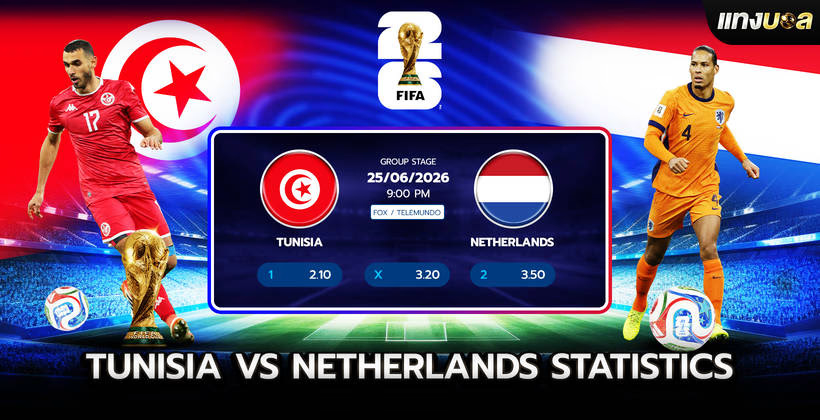
Group: Group F
Date and Time of Match: Thursday, June 25, 2026, at 9:00 PM ET / 18:00 UTC / 3:00 CET
Location: GEHA Field at Arrowhead Stadium, Kansas City, Missouri, USA
Coverage: FOX / Telemundo

Tunisia vs Netherlands

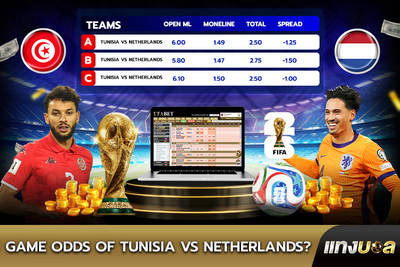
Game Odds of Tunisia vs Netherlands?

The game odds of Tunisia vs Netherlands are shown in the table below.

Teams Open ML Moneyline Total Spread
Tunisia vs Netherlands (A)6.001.492.50-1.25
Tunisia vs Netherlands (B)5.801.472.75-1.50
Tunisia vs Netherlands (C)6.101.502.50-1.00

The game odds of Tunisia vs Netherlands reflect a clear market lean toward the Netherlands, with Tunisia priced as the underdog. SportyTrader lists Tunisia at 6.00, the draw at 4.70, and the Netherlands at 1.49 for the June 25, 2026 World Cup matchup. Wincomparator shows a similar pricing range, with Tunisia at 5.80, the draw at 4.50, and the Netherlands at 1.47. Total goals values around 2.50 to 2.75 suggest a moderate scoring expectation rather than a defensive stalemate. Spread figures favor the Netherlands by 1.00 to 1.50 goals, reflecting stronger squad depth, attacking quality, and tournament pedigree. Tunisia remains competitive through defensive discipline, transition speed, and physical midfield pressure. UFABET tables present the matchup in a structured format for comparing opening lines, adjusted prices, totals, and spread movement.

Game Odds of Tunisia vs Netherlands?

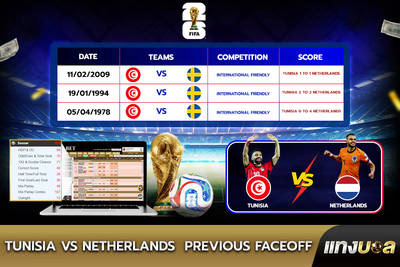
Tunisia vs Netherlands Previous Faceoff

The Tunisia vs Netherlands previous faceoff is shown in the table below.

Date Teams Competition Score
February 11, 2009Tunisia vs NetherlandsInternational FriendlyTunisia 1 to 1 Netherlands
January 19, 1994Tunisia vs NetherlandsInternational FriendlyTunisia 2 to 2 Netherlands
April 5, 1978Tunisia vs NetherlandsInternational FriendlyTunisia 0 to 4 Netherlands

The table presents the recorded results of Tunisia vs. the Netherlands across international friendly fixtures. The latest meeting ended in a 1 to 1 draw on February 11, 2009, at Stade 7 Novembre, according to Sky Sports match data. The 1994 meeting finished 2 to 2, showing Tunisia’s ability to compete against the Netherlands in a balanced attacking contest. The 1978 meeting produced the only Dutch win in the recorded series, with the Netherlands winning 4 to 0 in Tunis. Match history shows 3 recorded games, with Tunisia recording 2 draws and the Netherlands recording 1 win. Historical results support a matchup profile where Tunisia has stayed competitive in later meetings, while the Netherlands holds the strongest single result from the earlier fixture.

Tunisia vs Netherlands  Previous Faceoff

Last 5 Games from Tunisia

The last 5 games from Tunisia are shown in the table below.

Date Team A Score Team B Competition Type
April 1, 2026Canada0 to 0TunisiaFriendly
March 29, 2026Haiti0 to 1TunisiaFriendly
January 4, 2026Mali1 to 1TunisiaAfrica Cup of Nations
December 31, 2025Tanzania1 to 1TunisiaAfrica Cup of Nations
December 28, 2025Nigeria3 to 2TunisiaAfrica Cup of Nations

Tunisia's recent results show defensive discipline across friendlies and Africa Cup of Nations fixtures. A 0 to 0 draw against Canada reflects compact defending and controlled risk management. A 1 to 0 win against Haiti highlights Tunisia's ability to secure narrow results through efficient finishing. A 1 to 1 result against Mali shows competitive resistance against a physically strong African opponent. A 1 to 1 draw against Tanzania confirms consistency in avoiding open defensive breakdowns. A 3 to 2 loss against Nigeria shows attacking output despite pressure from a stronger forward line. GOAL lists the Tunisia results from December 2025 to April 2026 across friendlies and Africa Cup of Nations matches.

Last 5 Games from the Netherlands

The last 5 games from the Netherlands are shown in the table below.

Date Team A Score Team B Competition Type
March 31, 2026Netherlands1 to 1EcuadorFriendly
March 27, 2026Netherlands2 to 1NorwayFriendly
November 17, 2025Netherlands4 to 0LithuaniaWorld Cup Qualification UEFA
November 14, 2025Poland1 to 1NetherlandsWorld Cup Qualification UEFA
October 12, 2025Netherlands4 to 0FinlandWorld Cup Qualification UEFA

The Netherlands' recent results show strong attacking production across World Cup Qualification UEFA matches and steady control in friendly fixtures. A 1 to 1 draw against Ecuador reflects balanced match rhythm and measured preparation before the 2026 World Cup. A 2 to 1 win against Norway shows the Netherlands' ability to finish close matches against organized European opposition. A 4 to 0 win over Lithuania confirms dominant qualification form and strong final third execution. A 1 to 1 draw against Poland reflects resilience in a difficult away fixture. A 4 to 0 win against Finland highlights the Dutch scoring depth and sustained pressure across the full match. FotMob lists the Netherlands results from October 2025 to March 2026, while Reuters reported that the 4 to 0 Lithuania win secured 2026 World Cup qualification.

Group F Current Standing and Score Board

The group F current standing and scoreboard are shown in the table below.

Team Wins Loss Draw Last Game
Netherlands201Netherlands 2 to 1 Tunisia
Japan111Japan 1 to 0 Sweden
Sweden120Japan 1 to 0 Sweden
Tunisia012Netherlands 2 to 1 Tunisia

Group F standings place the Netherlands at the top after securing early points through disciplined performances and high scoring output. Japan holds second place with balanced results that reflect technical proficiency and physical strength across three matches. Sweden occupies third position while remaining in contention through defensive consistency and resilient play against group rivals. Tunisia completes the group with competitive matches that impact the overall ranking movement through narrow results. Group F standings illustrate how match results, point distribution, and goal margins shape competitive pressure across the Netherlands, Japan, Sweden, and Tunisia.

Current World Cup Standing Summary

The current World Cup standing summary is shown in the table below.

Team Rank Win Draw Loss Goal Scored Goals Conceded Goal Difference Home Statistics Away Statistics Clean Sheet
Netherlands121073+41W 1D 0L1W 0D 0L1
Japan211143+11W 0D 1L0W 1D 0L1
Sweden310235-21W 0D 1L0W 0D 1L1
Tunisia402125-30W 1D 0L0W 1D 1L0

The World Cup standing summary outlines performance across Group F through match results and scoring data. Netherlands leads the group with a positive goal difference and consistent victories in the opening rounds. Japan maintains a strong position through efficient goal scoring and organized defensive transitions during high intensity phases. Sweden records mixed outcomes with a focus on limiting goals conceded to stay within reach of the knockout stages. Tunisia shows high energy levels and tactical flexibility despite the current point distribution in the table. Performance patterns provide insight into team depth and consistency, influencing theirWorld Cup standing.

What is the Schedule of the World Cup for this Week

The schedule of the World Cup for this week is shown in the table below.

Match Date Time Location Group
Netherlands vs JapanJune 14, 20264:00 PM ETAT&T Stadium, Arlington, TexasGroup F
Sweden vs TunisiaJune 14, 202610:00 PM ETEstadio BBVA, Monterrey, MexicoGroup F
Netherlands vs SwedenJune 20, 20261:00 PM ETNRG Stadium, HoustonGroup F
Tunisia vs JapanJune 21, 202612:00 AM ETEstadio BBVA, Monterrey, MexicoGroup F
Japan vs SwedenJune 25, 20267:00 PM ETAT&T Stadium, Arlington, TexasGroup F
Tunisia vs NetherlandsJune 25, 20267:00 PM ETArrowhead Stadium, Kansas CityGroup F

The schedule of the World Cup for this week outlines key Group F fixtures that influence standings and advancement scenarios across all four nations. Netherlands vs Japan opens Group F action at AT&T Stadium in Arlington, where contrasting tactical approaches will shape early momentum. Sweden vs Tunisia follows on the same day in Monterrey, giving both sides an immediate opportunity to secure opening points. Netherlands vs Sweden presents a direct European rivalry that carries major implications for Group F positioning. Tunisia vs Japan determines how the group picture develops for two nations competing for a critical advancement spot. Japan vs Sweden and Tunisia vs Netherlands close out Group F simultaneously, ensuring every point matters as teams fight for places in the knockout round. Match timing and venue location across the United States and Mexico affect preparation, while the [schedules of the World Cup](/en/world-cup/) define performance consistency throughout the group stage.

How to Get the Latest Standings of the World Cup?

To get the latest standings of the World Cup, follow the six steps listed below.

  1. Access the UFABET website. Visit the official website or mobile application using a secure internet connection. The main interface displays navigation menus that highlight major football tournaments and tracking sections. World Cup standings and live data appear prominently within the platform for easy access.
  2. Navigate to the football section. Select the football category from the homepage to view various international competitions. The section organizes data by region and tournament, where World Cup information appears prominently. Group F teams, including the Netherlands, Japan, Sweden, and Tunisia, are listed under their respective standings.
  3. Find the World Cup standings page. Choose the World Cup option from the competition list to access live tables. The standings page shows updated group rankings, team positions, and total points from completed matches. Group F standings reflect current performance based on results from all scheduled fixtures.
  4. Examine group tables. Review each group table presented on the standings page to understand current placements. Rankings display wins, draws, losses, and goal statistics that determine advancement. Group F tables update automatically after each match involving the Netherlands, Japan, Sweden, and Tunisia.
  5. Review recent match results. Check the latest match outcomes linked to each team within the group. Match summaries include scorelines and performance data that influence ranking changes. Results from Group F fixtures directly affect standing positions and qualification scenarios for all four nations.
  6. Follow live standings updates. Observe real time updates during active matches to see immediate ranking shifts. The website refreshes data after goals and final whistles to support accurate tracking of tournament progress. Live standings in Group F provide immediate insight into how the Netherlands, Japan, Sweden, and Tunisia position themselves throughout the World Cup.

How do you bet on UFABET using Tunisia vs Netherlands Statistics?

Bet on UFABET using Tunisia vs. the Netherlands statistics by following the six steps listed below.

  1. Register a UFABET account. Create an account on the platform to access betting markets for the upcoming match. The process requires identity verification and account activation before participating in any markets. Completing registration unlocks full access to Tunisia vs Netherlands odds and match statistics.
  2. Add funds to the account. Deposit balance using supported payment options like bank transfers or e-wallets. Available balance allows users to place stakes across different categories within the match. Funding the account before the Tunisia vs Netherlands kickoff ensures timely participation in all available markets.
  3. Access the football betting menu. Enter the football section and select the Tunisia vs. the Netherlands match under World Cup listings. The match page presents odds, statistics, and various betting options for users. Group F fixtures, including Tunisia vs. the Netherlands, appear with full market coverage and updated team data.
  4. Review Tunisia vs. the Netherlands statistics. Examine key data, including recent match results, head to head records, and defensive performance. Statistical evaluation supports informed decision making for any selected market. Tunisia vs. the Netherlands historical data and current form provide essential context for assessing likely match outcomes.
  5. Select a betting option. Choose a preferred market such as match result, total goals, or handicap betting. Odds reflect probability based on team form and historical performance trends. Tunisia vs Netherlands markets offer a range of options suited to different betting approaches and risk preferences.
  6. Place and confirm the bet. Enter the stake amount and finalize the wager through the website interface. Live match tracking provides updates and potential in play opportunities during the game. Tunisia vs. the Netherlands in the play markets allows continued engagement throughout the fixture for football betting.

What are Tunisia's Current World Cup Standings and Performance Metrics?

Tunisia's current World Cup standings and performance metrics are listed below.

  • Group Position: Tunisia holds a position in Group F alongside the Netherlands, Japan, and Sweden following the opening fixtures of the tournament. The team competes within a challenging group that requires consistent results to secure advancement. Each match played directly influences Tunisia's standing within the Group F table. Performance in early fixtures sets the foundation for Tunisia's path toward the knockout stages.
  • Match Results Record: Tunisia records results across Group F fixtures that reflect the team's competitive level against European and Asian opposition. The match results record shows the cumulative outcome of wins, draws, and losses accumulated throughout the group stage. Every fixture against the Netherlands, Japan, and Sweden contributes to the overall record that determines final group placement. Tunisia's ability to maintain points across difficult matchups defines its standing in the current World Cup cycle.
  • Goals Scored: Tunisia produces scoring opportunities through organized attacking patterns and disciplined forward movement in transition. The goals scored metric reflects the team's offensive output and finishing efficiency across Group F matches. Forward players combine technical skill and tactical awareness to create chances against structured defensive setups. Consistent goal scoring remains essential for Tunisia to build the goal difference needed for advancement consideration.
  • Goals Conceded: Tunisia maintains defensive organization throughout Group F fixtures by limiting opposition penetration in critical areas. The goals conceded record reflects the team's ability to absorb pressure from high quality opponents, including the Netherlands and Japan. Defensive communication and positional discipline reduce the risk of conceding during high intensity phases of each match. Limiting goals against strong Group F opponents supports Tunisia's overall tournament metrics and ranking position.
  • Goal Difference: Tunisia's goal difference reflects the balance between attacking output and defensive solidity across all Group F fixtures. A favorable goal difference provides a ranking advantage in tiebreaker scenarios where multiple teams finish on equal points. The coaching staff prioritizes both scoring efficiency and defensive organization to improve this metric throughout the group stage. Goal difference remains a decisive factor in determining Group F final standings among closely matched teams.
  • Points Accumulation: Tunisia collects points through competitive performances in each Group F fixture against the Netherlands, Japan, and Sweden. The points accumulated throughout the group stage determine whether Tunisia advances to the knockout rounds of the tournament. Every draw and victory adds to the tally that shapes the final Group F standings and advancement eligibility. Consistent points accumulation across all three group matches remains the primary objective for Tunisia's World Cup campaign.
  • Clean Sheet Record: Tunisia records clean sheets by organizing defensive lines that minimize opposition scoring opportunities in key moments. The clean sheet record demonstrates the team's ability to neutralize attacking threats from technically strong Group F opponents. Structured marking, disciplined shape, and strong goalkeeper performance contribute to defensive shutouts in competitive fixtures. Maintaining clean sheets against the Netherlands, Japan, and Sweden reinforces Tunisia's defensive identity throughout the tournament.
  • Form and Momentum: Tunisia enters each Group F fixture with tactical preparation focused on exploiting opposition weaknesses identified through statistical analysis. The team's form and momentum reflect consistency in applying the coach's game plan across consecutive matches. Positive results build confidence within the squad and reinforce the collective mentality needed for high stakes tournament football. Tunisia's momentum through the group stage influences their readiness and competitive edge heading into decisive football betting fixtures.

How has Tunisia's National Football Team Performed Recently?

Tunisia's national football team has performed with moderate consistency throughout the last 18 months. Tunisia maintains a record of 8 wins, 5 losses, and 7 draws within the recent 24 month window. Performance factors include the injury to key midfielder Ellyes Skhiri, which disrupted the central transition play. Managerial changes occurred in early 2024 with the appointment of a new technical staff focused on tactical discipline. Schedule difficulty involved matches against high ranking African and European nations during tournament preparations. The squad focuses on improving the conversion rate from open play opportunities (penalty kicks, corner headers, and breakaway sprints).

What Tactical Formations are Tunisia expected to use in this Match?

The tactical formations that Tunisia is expected to use in this match are listed below.

  • 4-3-3 Formation: Tunisia deploys three forwards across a wide attacking line to stretch the defensive shape of the Netherlands, Japan, and Sweden. The midfield trio provides balance between defensive coverage and forward support during transition phases. Wide forwards press aggressively from high positions to force errors and win the ball in dangerous areas. The formation allows Tunisia to maximize attacking width while maintaining compactness through the central midfield corridor.
  • 4-2-3-1 System: Tunisia uses a double pivot in the base of midfield to shield the defensive line and disrupt opposition buildup play. The attacking midfielder operates behind a lone striker to link phases of play and create numerical advantages in tight spaces. The system gives Tunisia control in central areas while allowing fullbacks to contribute to attacking sequences along the flanks. The 4-2-3-1 provides Tunisia with the defensive structure needed to absorb pressure from technically superior Group F opponents.
  • 3-5-2 Defensive Shape: Tunisia shifts to three central defenders to add physical presence and aerial dominance against attacking teams with wide threats. The wing-backs provide width in both defensive and offensive phases, effectively covering the flanks across a compact five-man defensive unit. Two strikers press in tandem from the front to reduce the time available for opposing defenders to build from the back. The structure allows Tunisia to remain defensively solid while maintaining a viable outlet for counter-attacking opportunities in open play.
  • Compact 4-4-2 Block: Tunisia organizes two disciplined banks of four to minimize space between defensive and midfield lines during high-pressure situations. Two strikers coordinate their pressing movements to cut off passing lanes and force opposition play toward the flanks. The midfield four maintains horizontal compactness to deny central penetration and protect the defensive unit throughout the match. The setup reflects Tunisia's historically strong defensive identity and its ability to frustrate technically gifted opponents through organized collective shape.
  • High Press Strategy: Tunisia applies aggressive pressing in the attacking third to force turnovers and generate quick scoring opportunities from regained possession. Forward players coordinate their trigger movements to close down goalkeepers and central defenders during buildup phases. The high press creates chaos against teams that prefer patient possession football, disrupting their rhythm and forcing mistakes in dangerous areas. Tunisia's pressing intensity reflects the physical preparation and tactical discipline embedded throughout their World Cup readiness campaign under current management.
  • Low Block Defensive Setup: Tunisia sits in a deep and organized defensive structure against high-intensity opponents to absorb pressure and protect the goalkeeper from direct attacks. The back line maintains a narrow and disciplined shape that limits penetration through central channels and forces opposition play to less threatening wide areas. Defensive compactness allows Tunisia to absorb waves of pressure before releasing quick counter-attacking combinations through pacey forward runners. The approach mirrors the defensive solidity that defined Tunisia's historic qualifying campaign and supports their strategy for managing Group F fixtures in football betting analysis.

How does Tunisia's Passing Accuracy Compare to the Netherlands?

Tunisia's passing accuracy compares to the Netherlands by falling significantly short, with Tunisia recording 78% passing accuracy in the defensive zone against the Netherlands' 90.63% recorded during their European World Cup qualifying campaign, completing 4,576 of 5,035 passes with an average 64.88% possession per match. The 12-point gap is explained through contrasting styles, as Tunisia prioritizes quick transitions and defensive compactness over ball circulation, while the Netherlands relies on triangular passing and maximum width to control tempo, though they struggle against deep defensive blocks, exactly the setup Tunisia deploys against technically superior sides in football betting matchups.

Does Tunisia have a Reliable Penalty Taker if the Match Goes to a shootout?

No, Tunisia does not have a clearly reliable penalty taker if the match goes to a shootout, as their overall shootout record stands at four wins and four losses across eight attempts, with their most recent defeat coming against Mali at the 2026 AFCON in January. In that shootout, goalkeeper Djigui Diarra saved from both Mohamed Ali Ben Romdhane and Elias Achouri, while Ali Al-Abdi also missed, meaning Tunisia failed to convert three of their kicks despite holding numerical superiority for most of the match. With Tunisia averaging just 1.2 goals per match and carrying a chronic difficulty converting chances, the absence of a designated spot-kick specialist makes their penalty composure a genuine concern for football betting assessment heading into the 2026 World Cup.

Which Players are Currently on Tunisia's National Team Roster?

The players who are currently on Tunisia's national team roster are listed below.

  • Aymen Dahmen (Montpellier, Goalkeeper): Dahmen serves as Tunisia's first-choice goalkeeper, bringing strong reflexes and a commanding presence between the posts. Dahmen's shot-stopping ability proved critical during Tunisia's historic World Cup qualifying campaign, where no goals were conceded. Dahmen's distribution from the back supports Tunisia's quick transition style during defensive phases. Dahmen's experience across African competitions makes him a reliable last line of defense heading into Group F.
  • Bechir Ben Said (Club Africain, Goalkeeper): Ben Said provides experienced backup goalkeeping cover within the Tunisian squad from his domestic base at Club Africain. Ben Said's familiarity with the national team setup ensures seamless integration when called upon in competitive fixtures. Ben Said's shot-stopping consistency at the club level earns his inclusion as a trusted reserve option. Ben Said's presence gives the coaching staff confidence in the depth of the goalkeeping department throughout the tournament.
  • Montassar Talbi (Lorient, Centre-back): Talbi anchors the Tunisian defensive line with physical strength and aerial dominance from his base at Lorient. Talbi's composure under pressure allows him to handle high-intensity attacking threats from technically superior opponents. Talbi's reading of the game enables early interceptions that prevent dangerous situations from developing inside the penalty area. Talbi's partnership with fellow central defenders forms the foundation of Tunisia's historically solid defensive structure.
  • Yassine Meriah (Club Africain, Centre-back): Meriah brings veteran leadership and positional discipline to Tunisia's backline from his domestic club platform. Meriah's experience in major African tournaments equips him with the tactical awareness needed against varied attacking styles. Meriah's aggressive tackling and physical presence limit the effectiveness of opposition forwards during open play. Meriah's ability to organize the defensive unit through vocal communication strengthens collective defensive shape throughout matches.
  • Dylan Bronn (Salernitana, Centre-back): Bronn contributes reliable defensive coverage and ball-playing ability from his Serie A experience at Salernitana. Bronn's technical quality allows Tunisia to build from the back with confidence against high-pressing opponents. Bronn's aerial ability at set pieces provides an additional threat during Tunisia's attacking dead-ball situations. Bronn's dual European and African competition experience gives him the adaptability required for World Cup group stage intensity.
  • Yan Valery (Angers, Right-back): Valery delivers pace and defensive discipline along the right flank from his Ligue 1 base at Angers. Valery's overlapping runs create width and additional attacking options when Tunisia transitions from defensive phases. Valery's crossing accuracy from advanced positions contributes to Tunisia's set-piece and wide delivery threat. Valery's European club experience positions him as a key figure in managing the physical demands of back-to-back World Cup fixtures.
  • Ali Abdi (Valenciennes, Left-back): Abdi provides energetic left-back coverage with strong defensive instincts and a willingness to support attacks from deep. Abdi's recovery pace allows him to track back effectively against fast, wide forwards from stronger Group F opponents. Abdi's delivery from wide areas adds variety to Tunisia's attacking approach during sustained possession phases. Abdi's consistent availability and tactical reliability make him a trusted selection within the defensive structure.
  • Hannibal Mejbri (Burnley, Midfielder): Mejbri functions as Tunisia's most technically gifted midfielder, bringing creative vision and tenacious pressing from his Championship base at Burnley. Mejbri's ability to carry the ball through midfield pressure and find teammates in advanced positions makes him Tunisia's primary creative outlet. Mejbri's combative defensive work rate complements his attacking contributions by winning possession in key areas of the pitch. Mejbri's performances at the club and international level establish him as Tunisia's most important player heading into the 2026 World Cup.
  • Anis Ben Slimane (Brøndby, Midfielder): Ben Slimane contributes technical midfield quality and goal-scoring threat from his Scandinavian club base at Brøndby. Ben Slimane's movement between lines creates passing options for teammates while stretching opposition midfield structures. Ben Slimane's eye for goal from distance gives Tunisia an additional weapon beyond their primarily defensive identity. Ben Slimane's progressive passing and intelligent positioning support Tunisia's transition from defense to attack.
  • Ellyes Skhiri (Eintracht Frankfurt, Defensive Midfielder): Skhiri anchors Tunisia's midfield defensive structure through disciplined positioning and ball-winning ability at Eintracht Frankfurt. Skhiri's reading of opposition attacks allows him to intercept passes and disrupt buildup play before it reaches dangerous areas. Skhiri's experience in the Bundesliga equips him with the physical and tactical tools needed to compete against technically strong Group F midfields. Skhiri's leadership within the squad makes him a central figure in maintaining Tunisia's compact defensive identity throughout the tournament.
  • Ferjani Sassi (Al-Duhail, Midfielder): Sassi brings veteran experience and technical composure to Tunisia's midfield from his Qatar Stars League base at Al-Duhail. Sassi's passing range and ability to control match tempo provide Tunisia with stability during phases of defensive transition. Sassi's set-piece delivery from free kicks and corners gives Tunisia a reliable dead-ball threat across all three group stage fixtures. Sassi's leadership and accumulated international experience make him a key influence in high-pressure moments throughout the competition.
  • Wahbi Khazri (Montpellier, Forward/Attacking Midfielder): Khazri operates as a versatile attacking presence capable of playing behind the striker or wide across the front line at Montpellier. Khazri's technical skill and experience at the highest level give Tunisia creativity and unpredictability in the final third. Khazri's World Cup experience from previous tournaments provides the squad with a composed and reliable option during difficult moments. Khazri's ability to deliver in decisive fixtures, including his winner against France in Qatar 2022, reinforces his value to the Tunisian attack.
  • Issam Jebali (Odense, Striker): Jebali leads Tunisia's attacking line with intelligent movement and clinical finishing from his Danish Superliga base at Odense. Jebali's ability to hold up play and bring teammates into attacking positions provides Tunisia with a physical focal point in the final third. Jebali's work rate off the ball contributes to Tunisia's high-press strategy by closing down defenders and reducing their time on the ball. Jebali's goal-scoring record at the club level establishes him as Tunisia's primary striking option throughout the World Cup group stage.
  • Seifeddine Jaziri (Zamalek, Striker): Jaziri contributes physicality and aerial threat as a target striker from his Egyptian Premier League base at Zamalek. Jaziri's ability to win aerial duels and hold possession under pressure gives Tunisia an effective outlet during long ball transitions. Jaziri's physical presence causes problems for opposition central defenders and creates space for supporting midfield runners. Jaziri's goal contributions in African competition make him a viable impact option when Tunisia requires a change of attacking approach.
  • Ismael Gharbi (Parma, Attacking Midfielder): Gharbi represents the emerging generation of Tunisian talent, bringing technical flair and creativity from his Serie A experience at Parma. Gharbi's dribbling ability and quick combination play allow Tunisia to unlock compact defensive blocks in tight spaces. Gharbi's youth and energy provide the coaching staff with a dynamic option capable of changing the tempo of matches from the bench. Gharbi's development trajectory positions him as a future cornerstone of Tunisian football beyond the 2026 World Cup cycle for football betting followers.

What are the Netherlands' Current World Cup Standings and Performance Metrics?

The Netherlands' current World Cup standings and performance metrics are listed below.

  • Group Position: The Netherlands holds the top position in Group F heading into the 2026 World Cup based on their qualification strength and FIFA ranking advantage over Japan, Sweden, and Tunisia. The Netherlands currently ranks first in Group F standings due to consistent results in their recent competitive fixtures. The Netherlands' dominance in European qualifying established them as the clear group favorite with the best pathway toward the knockout rounds. The Netherlands' first-place standing reflects the collective quality of a squad capable of imposing its style against all three Group F opponents.
  • Match Results Record: Netherlands' match results record reflects a pattern of controlled victories and competitive draws across recent international fixtures. The Netherlands' recent results include a 2-1 win over Norway, a 1-1 draw with Ecuador, a 4-0 victory over Lithuania, a 1-1 draw with Poland, and a 4-0 win over Finland during their qualifying campaign. The Netherlands' ability to produce high-scoring victories against weaker opponents while managing draws against stronger sides demonstrates tactical flexibility. The Netherlands's results record entering Group F positions them as the side most likely to advance from the group with maximum or near-maximum points.
  • Goals Scored: Netherlands' goals scored metric reflects a high-output attacking unit capable of breaking down defensive structures through patience and technical quality. The Netherlands recorded 27 goals across their European qualifying campaign, averaging 3.38 goals per match. The Netherlands' attacking production is distributed across multiple contributors rather than relying on a single scorer, adding unpredictability to their offensive approach. The Netherlands' goal-scoring efficiency against both deep-sitting and high-pressing opponents confirms their attacking versatility heading into Group F competition.
  • Goals Conceded: The Netherlands' goals conceded record demonstrates a defensively organized unit capable of shutting out opponents across extended periods of competitive football. The Netherlands conceded just 4 goals throughout their European qualifying campaign, averaging 0.5 goals per match across eight fixtures. The Netherlands' defensive solidity is anchored by experienced central defenders who initiate play from the back while maintaining positional discipline. The Netherlands's low concession rate reflects the coaching staff's emphasis on defensive structure as the foundation for attacking expression throughout the tournament.
  • Goal Difference: Netherlands' goal difference heading into the 2026 World Cup is among the strongest of any Group F side, built through dominant qualifying performances and consistent attacking output. The Netherlands accumulated 27 goals scored against just 4 conceded during European qualifying, producing a goal difference of +23 across their campaign. The Netherlands' superior goal difference provides a decisive tiebreaker advantage should Group F standings finish level on points with Japan, Sweden, or Tunisia. The Netherlands' ability to score heavily while conceding minimally reflects the balance between attacking ambition and defensive responsibility within their tactical setup.
  • Points Accumulation: The Netherlands' points accumulation throughout their World Cup qualifying campaign reflects a consistent ability to win matches against varied opposition across different tactical contexts. The Netherlands recorded 5 clean sheets during their qualifying campaign while maintaining an average of 2.00 points per game across their fixtures. The Netherlands' steady points return positions them as a team that rarely drops points against beatable opponents while remaining competitive against top-level sides. The Netherlands' points profile heading into Group F suggests a high probability of advancing to the knockout stage regardless of the outcomes in their more challenging fixtures.
  • Clean Sheet Record: Netherlands' clean sheet record throughout qualifying underlines the defensive cohesion that makes them difficult to score against across a full 90 minutes. The Netherlands kept 5 clean sheets during their European qualifying campaign, with their goalkeeper making 14 saves across all fixtures. The Netherlands' defensive organization extends beyond individual quality to encompass collective pressing coordination that limits opposition opportunities before they reach the penalty area. The Netherlands' clean sheet frequency against European competition provides confidence that their defensive structure can contain the attacking threats presented by Tunisia, Japan, and Sweden in Group F.
  • Form and Momentum: The Netherlands' form and momentum entering the 2026 World Cup reflect a squad operating with confidence built through dominant qualifying performances and strong recent friendly results. The Netherlands head into the World Cup as dark horses, blending Total Football flair with defensive steel as they look to end their long wait for global glory. The Netherlands' momentum is reinforced by the availability of key players across all positions and a tactically experienced coaching setup capable of adjusting game plans between fixtures. The Netherlands' positive trajectory through the qualifying phase and pre-tournament preparation establishes them as the most dangerous team in Group F for football betting analysis and advancement prediction.

How Effective is the Netherlands's Pressing Game Against Tunisia?

The Netherlands' pressing game against Tunisia is effective by design but limited in impact by Tunisia's deliberate low-block structure, which is built specifically to neutralize high-possession pressing teams. The Netherlands relies on a mid-to-high pressing block that seeks to stifle the opponent's buildup, but they carry a documented tendency toward sterile possession against deeply retracted defenses. Tunisia compresses space into narrow corridors, forcing repetitive circulation and emotional erosion, meaning the Netherlands pressing game is absorbed rather than beaten. Tunisia simply denies the spaces that make the Netherlands' press effective. Tunisia's defensive phase is built around a very dense defensive curtain aimed at forcing the opponent to play horizontally, which directly neutralizes the vertical pressing triggers that the Netherlands use to win the ball high and transition quickly into attack through football betting favorable positions.

How does the Netherlands National Football Team Manage Game Tempo?

The Netherlands manages game tempo by controlling possession, dictating the rhythm of buildup play, and imposing its structure on opponents from the opening minutes. Frenkie de Jong orchestrates from deep, dictating tempo and progression through midfield alongside Tijjani Reijnders and Ryan Gravenberch, while Memphis Depay serves as the primary attacking reference point with five of his seven qualifying goals coming before half-time. The Netherlands averaged 64.88% possession throughout their European qualifying campaign, using that dominance to control match pace and reduce the number of transitions available to opponents. Their ability to control possession and dictate the tempo will be a key challenge for every opponent in Group F, with Tunisia's low-block setup representing the most direct tactical counter to the Netherlands's tempo-control approach in football betting analysis.

Is Tunisia Likely to Win Against the Netherlands?

No, Tunisia is not likely to win against the Netherlands based on head-to-head history, current form, and match context, though an upset cannot be entirely dismissed. The Netherlands is favored at -125 to win Group F, while Tunisia is priced at +900, reflecting the significant quality gap between the two sides entering their June 25 fixture at Arrowhead Stadium. Tunisia is disciplined and difficult to break down but lacks the attacking quality to threaten the top two in Group F, and Tunisia's realistic path is to take points from Sweden, with their best opportunity on June 14, before absorbing the Netherlands and Japan. Netherlands historically struggles with psychological fragility in high-pressure moments and a tendency toward sterile possession against low defensive blocks, the precise setup Tunisia deploys, meaning a draw remains a plausible outcome should Hannibal Mejbri fire and Tunisia's defensive discipline hold across 90 minutes in football betting scenarios.