Qatar vs Switzerland Statistics

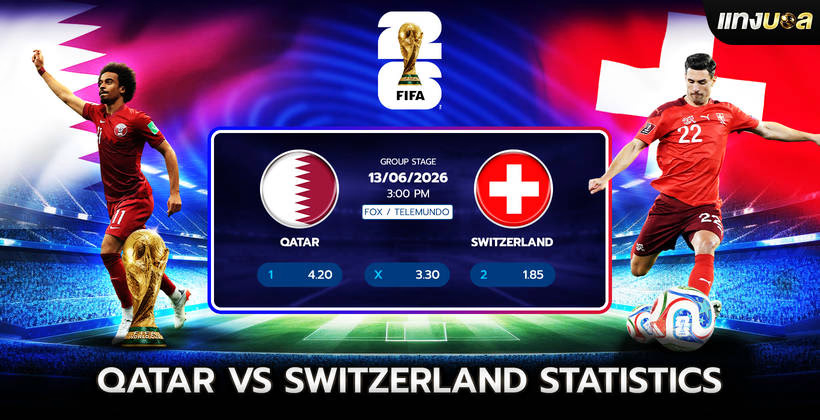
Qatar vs Switzerland statistics present a Group B matchup shaped by differences in recent form, tactical structure, and competitive experience. Previous meetings favor Switzerland, with multiple wins and no recorded losses, which reflects a consistent advantage in head-to-head results. Qatar enters with mixed outcomes from recent AFC fixtures, including a 2 to 1 win over the United Arab Emirates and a draw against Oman, alongside losses against stronger opposition. Switzerland arrives with strong momentum after an unbeaten qualification campaign, supported by high-scoring wins against Kosovo and Sweden and controlled draws in away matches. Match expectations indicate Switzerland holds the advantage through structured midfield control and defensive discipline, while Qatar relies on counterattacking phases that require efficiency to remain competitive in Qatar vs Switzerland.

Qatar vs Switzerland Statistics
Group: Group B
Date and Time of Match: June 13, 2026, (3:00 PM ET or 19:00 UTC)
Location: Levi's Stadium in Santa Clara, California
Coverage: FOX / Telemundo

Qatar vs Switzerland Statistics

Game Odds of Qatar vs Switzerland?

The game odds of Qatar vs Switzerland are shown in the table below.

Teams Open ML Moneyline Total Spread
Qatar vs Switzerland (A)3.103.052.25+1.10
Qatar vs Switzerland (B)3.253.202.20+1.25
Qatar vs Switzerland (C)3.053.002.30+1.05

The game odds of Qatar vs Switzerland represent early bookmaker positioning across separate market snapshots. Switzerland holds the favorite status through consistent tournament performance, structured midfield control, and defensive organization. Qatar reflects higher odds due to reliance on home advantage factors, tactical transitions, and developing squad cohesion. Sample entries display price variation between opening lines and adjusted moneyline values, showing how sportsbooks react to betting volume and updated match data (injury reports, lineup confirmations). Market observation across multiple entries reveals how totals shift based on expected goal output, while spread adjustments indicate perceived margin differences. UFABET tables present structured comparisons that support the evaluation of pricing trends and betting opportunities in Qatar vs Switzerland.

Game Odds of  Qatar vs Switzerland?

Qatar vs Switzerland Previous Faceoff

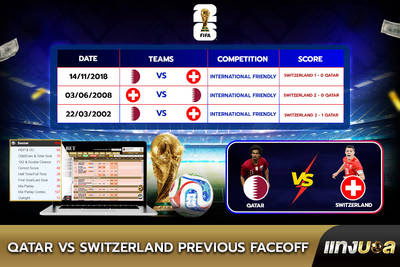
The Qatar vs Switzerland previous faceoff is shown in the table below.

Date Teams Competition Score
November 14, 2018Qatar vs SwitzerlandInternational FriendlySwitzerland 1 to 0 Qatar
June 3, 2008Switzerland vs QatarInternational FriendlySwitzerland 2 to 0 Qatar
March 22, 2002Qatar vs SwitzerlandInternational FriendlySwitzerland 2 to 1 Qatar

The table presents recorded results of Qatar vs Switzerland across multiple international friendlies held in different periods. Switzerland secured wins in all listed encounters through structured defensive positioning and efficient goal conversion during key match phases. Qatar recorded competitive performances yet faced difficulty breaking organized defensive lines, which influenced final score margins. Match timelines reflect Switzerland’s consistency in controlling tempo, possession, and transition play across different eras (2002 squad rebuild phase, 2008 European preparation cycle, 2018 tactical consolidation period). Historical data support the evaluation of tactical matchups, team progression, and outcome trends, which remain relevant for performance assessment and betting analysis in Qatar vs Switzerland.

Qatar vs Switzerland Previous Faceoff

Last 5 Games from Qatar

The last 5 games from Qatar are shown in the table below.

Date Team A Score Team B Competition Type
January 29, 2024Qatar2 to 1PalestineAFC Asian Cup
January 22, 2024Qatar1 to 0ChinaAFC Asian Cup
January 17, 2024Tajikistan0 to 1QatarAFC Asian Cup
January 13, 2024Qatar3 to 0LebanonAFC Asian Cup
November 21, 2023Qatar8 to 1AfghanistanWorld Cup Qualifier

Qatar’s recent results show a strong and consistent run during official competitions, highlighted by dominant performances in the AFC Asian Cup and World Cup qualifiers. A 2-1 win against Palestine on January 29, 2024, reflects effective attacking transitions and match control under pressure. A 1-0 win against China on January 22, 2024, confirms a disciplined defensive structure and efficient goal conversion. A 1-0 away victory against Tajikistan on January 17, 2024, shows resilience in low-scoring matches. A 3-0 win against Lebanon on January 13, 2024, demonstrates offensive efficiency and control from kickoff. An 8-1 win against Afghanistan on November 21, 2023, highlights Qatar’s scoring capacity against lower-ranked opposition, reinforcing positive momentum entering major tournaments.

Last 5 Games from Switzerland

The last 5 games from Switzerland are shown in the table below.

Date Team A Score Team B Competition Type
November 21, 2023Romania1 to 0SwitzerlandEuro Qualifier
November 18, 2023Switzerland1 to 1KosovoEuro Qualifier
November 15, 2023Israel1 to 1SwitzerlandEuro Qualifier
October 15, 2023Switzerland3 to 3BelarusEuro Qualifier
October 12, 2023Cyprus0 to 4SwitzerlandEuro Qualifier

Switzerland’s recent results show a consistent pattern of competitive matches with mixed outcomes during the UEFA Euro qualifying campaign. A 1 to 0 loss against Romania on November 21, 2023, reflects difficulty converting chances despite sustained possession phases. A 1-to-1 draw against Kosovo on November 18, 2023, highlights late-game pressure affecting result control. A 1-to-1 draw against Israel on November 15, 2023, confirms balanced midfield play with limited finishing efficiency. A 3 to 3 draw against Belarus on October 15, 2023, shows strong attacking output combined with defensive lapses during transitions. A 4- 0 win against Cyprus on October 12, 2023, demonstrates Switzerland’s ability to dominate lower-ranked opposition through structured buildup and effective goal conversion.

Group B Current Standing and Score Board

Group B's current standing and scoreboard are shown in the table below.

Team Wins Loss Draw Last Game
Canada201Canada 2 to 1 Qatar
Bosnia-Herzegovina111Bosnia-Herzegovina 1 to 1 Switzerland
Qatar120Canada 2 to 1 Qatar
Switzerland012Bosnia-Herzegovina 1 to 1 Switzerland

Group B standings place Canada at the top after two wins and one draw, supported by a 2 to 1 result against Qatar that strengthened its position in the table. Bosnia-Herzegovina holds second place with balanced results across three matches, highlighted by a draw against Switzerland that secured a key point. Qatar records one win yet drops to third position after two losses, including the match against Canada, which affected the ranking movement. Switzerland remains without a win while collecting two draws, which keeps Switzerland within reach of advancement depending on the remaining outcomes. Group B standings illustrate how early match results, point distribution, and goal margins shape competitive pressure across Canada, Bosnia-Herzegovina, Qatar, and Switzerland.

Current World Cup Standing Summary

The current World Cup standing summary is shown in the table below.

Team Rank Win Draw Loss Goal Scored Goals Conceded Goal Difference Home Statistics Away Statistics Clean Sheet
Canada121052+31W 1D 0L1W 0D 0L1
Bosnia-Herzegovina21113301W 0D 1L0W 1D 0L1
Qatar310235-21W 0D 1L0W 0D 1L0
Switzerland402123-10W 1D 0L0W 1D 1L0

The World Cup standing summary outlines performance across Canada, Bosnia-Herzegovina, Qatar, and Switzerland through match results and scoring data. Canada leads the group with strong offensive output and a positive goal difference, supported by consistent results in both home and away fixtures. Bosnia-Herzegovina holds second position with balanced scoring and defensive stability, reflected in equal goals scored and conceded. Qatar has mixed results, with higher goals conceded, which impacts its overall ranking despite one win. Switzerland remains winless but secures draws that contribute to its point accumulation. Home and away statistics emphasize consistency across venues, while clean sheet data highlights defensive organization throughout the group stage, influencing the World Cup standing.

What is the Schedule of the World Cup for this Week

The schedule of the World Cup for this week is shown in the table below.

Match Date Time Location Group
Canada vs QatarJune 12, 20267:00 PMBMO Field, TorontoGroup B
Bosnia-Herzegovina vs SwitzerlandJune 13, 20265:00 PMBC Place, VancouverGroup B
England vs United StatesJune 13, 20268:00 PMMetLife Stadium, New JerseyGroup A
Iran vs WalesJune 14, 20266:00 PMAT&T Stadium, ArlingtonGroup A
France vs DenmarkJune 15, 20269:00 PMSoFi Stadium, Los AngelesGroup C
Argentina vs PolandJune 16, 20268:00 PMMercedes-Benz Stadium, AtlantaGroup D

The schedule of the World Cup for this week presents key group stage fixtures that influence early rankings and competitive momentum across multiple groups. Canada vs Qatar serves as a decisive Group B matchup that shapes early positioning within the group table. Bosnia-Herzegovina vs Switzerland adds pressure on point accumulation, where a single result affects advancement chances. England vs. the United States highlights a high-profile encounter that impacts Group A standings through direct competition between leading teams. Match timing and venue location influence preparation cycles, travel demands, and crowd dynamics during early tournament stages. Fixture order and recovery intervals in the schedules of the World Cup play an important role in maintaining performance consistency and evaluating progression patterns across teams.

How to Get the Latest Standings of the World Cup?

To get the latest standings of the World Cup, follow the six steps listed below.

  1. Open the UFABET website. Access the official UFABET website or mobile application through a secure connection. The homepage displays navigation options that include major football competitions and tournament tracking sections.
  2. Enter the football category. Select the football section from the main interface. The football category organizes competitions by region and tournament, where the World Cup appears with related data pages.
  3. Locate the World Cup standings page. Choose the World Cup listing from the competition menu. The standings page presents updated group rankings, team positions, and accumulated points from completed fixtures.
  4. Analyze group rankings. Review each group table displayed on the standings page. Rankings show match outcomes through wins, draws, losses, and goal statistics, which define team placement within the group.
  5. Track recent match outcomes. Examine the latest match results connected to each team entry. Match summaries provide scorelines, key events, and statistical data that directly affect ranking adjustments.
  6. Observe real-time updates. Monitor live standings during ongoing matches. UFABET updates rankings immediately after goal events and final results, which ensures accurate tracking of tournament progression and World Cup standing.

How do you bet on UFABET Using Qatar vs Switzerland Statistics?

Bet on UFABET using Qatar vs Switzerland statistics by following the six steps listed below.

  1. Create a UFABET account. Register on the UFABET platform to access football betting markets for Qatar vs Switzerland. The process requires identity details, account verification, and activation before placing wagers.
  2. Fund the betting wallet. Add balance to the UFABET account using supported payment systems (bank transfer, e-wallet services, debit cards). Account balance enables participation in multiple betting markets.
  3. Open the football betting section. Access the football category from the UFABET interface and select the Qatar vs Switzerland fixture listed under World Cup matches. The match page displays odds, team data, and betting options.
  4. Evaluate Qatar vs Switzerland statistics. Review statistical data (recent match results, head-to-head records, goals scored, defensive performance). Statistical comparison provides a clear basis for assessing team strength and match expectations.
  5. Choose a betting market. Select a market option (match result, total goals, handicap betting). Odds reflect probability based on Qatar vs Switzerland performance trends and historical data.
  6. Confirm the wager. Enter the stake amount and finalize the bet through the UFABET system. Match tracking tools provide updates and in-play opportunities during live action football betting.

What are Qatar's Current World Cup Standings and Performance Metrics?

Qatar's current World Cup standings and performance metrics are listed below.

  • Group Position: Qatar holds a mid-tier position entering the World Cup stage after securing qualification through AFC competition. Qualification results confirm Qatar’s placement among advancing teams in the tournament structure.
  • Match Results Record: Qatar records mixed outcomes across recent fixtures with a combination of wins, draws, and losses during qualification rounds (Qatar 2 to 1 United Arab Emirates, Uzbekistan 3 to 0 Qatar, Qatar 1 to 0 Iran). Match consistency remains a key factor affecting ranking.
  • Goals Scored: Qatar produces moderate scoring output through structured attacking phases (Qatar 5 to 1 North Korea, Qatar 3 to 1 Kyrgyzstan). Offensive production reflects controlled buildup and transition play.
  • Goals Conceded: Qatar concedes multiple goals in several matches, which impacts defensive rating (United Arab Emirates 5 to 0 Qatar, Iran 4 to 1 Qatar). Defensive gaps appear during high-pressure phases.
  • Goal Difference: Qatar maintains an inconsistent goal difference due to variation in match outcomes between high-scoring wins and heavy defeats. Goal difference influences ranking in closely contested groups.
  • Points Accumulation: Qatar secures points through key victories and draws during qualification (Oman 0 to 0 Qatar, Qatar 2 to 1 United Arab Emirates). Total points determine advancement and standing position.
  • Clean Sheet Record: Qatar records limited clean sheets, with one defensive result recorded in a goalless draw against Oman. Clean sheet frequency reflects defensive organization across matches.
  • Form and Momentum: Qatar enters the World Cup with mixed momentum shaped by alternating results and recent qualification success. Performance trend reflects competitive capability against regional teams alongside inconsistency against higher-ranked opposition.

How has Qatar's National Football Team Performed Recently?

Qatar’s national football team performed with mixed results recently across AFC qualification matches and international fixtures over the past 12 to 18 months, showing periods of strong attacking output alongside defensive inconsistency. Qatar recorded notable wins against regional opponents (Qatar 2 to 1 United Arab Emirates, Qatar 3 to 1 Kyrgyzstan), which highlight effective attacking structure and controlled buildup play. Qatar faced setbacks against higher-ranked teams (Uzbekistan 3 to 0 Qatar, Iran 4 to 1 Qatar), where defensive transitions exposed gaps during sustained pressure. Squad rotation and tactical adjustments influenced match rhythm, with coaching strategies focusing on compact midfield structure and counterattacking phases. Fixture congestion across qualifiers and friendlies affected preparation cycles and consistency in performance levels. Qatar maintains a competitive status within the AFC region, yet requires improved defensive stability and result consistency to strengthen performance in upcoming World Cup matches.

What Tactical Formations are Qatar expected to use in this Match?

The tactical formations that Qatar expected to use in this match are listed below.

  • Back Five Structure (5-3-2): Qatar deploys a three-center-back system supported by two wing-backs to create a compact defensive line. Qatar uses the formation to limit space in central areas while allowing width during counterattacks.
  • Compact Midfield Block (3-5-2): Qatar shifts into a midfield-heavy setup that increases control in central zones. Qatar relies on three central midfielders to disrupt opposition buildup and maintain possession during controlled phases.
  • Counterattacking Shape (4-4-2): Qatar adopts a flat defensive structure when facing high-pressure teams. Qatar focuses on quick ball recovery and direct forward passes to exploit gaps left by advancing opponents.
  • Defensive Low Block (5-4-1): Qatar organizes deep defensive lines when protecting leads or facing dominant attacking sides. Qatar prioritizes closing passing lanes and reducing shooting opportunities inside the penalty area.
  • Attacking Transition Setup (3-4-3): Qatar pushes wing-backs forward during attacking phases to create width and support front-line movement. Qatar uses the formation to increase numbers in the final third during quick transitions.
  • Set-Piece Organization: Qatar structures players strategically during corners and free kicks. Qatar focuses on aerial presence and coordinated movement to create scoring opportunities from dead-ball situations.

What is Qatar's Average Ball Possession Percentage?

48% to 52 % represents Qatar's average ball possession percentage across recent international matches and competitive fixtures. Qatar maintains balanced control of the ball through structured midfield positioning and short passing sequences that support gradual buildup play. Qatar records higher possession figures in matches against lower-ranked regional opponents, where controlled tempo and sustained ball circulation define attacking phases. Qatar records lower possession figures against stronger teams, where defensive compactness and counterattacking patterns reduce possession share. Match data across AFC competitions and recent friendlies reflects variation in possession based on opposition strength and tactical approach. Qatar's possession metrics indicate a flexible system that balances control and defensive discipline across different match conditions.

Can Qatar Secure a win Against Switzerland Based on Recent Form?

No, Qatar cannot secure a win against Switzerland based on recent form. Qatar records mixed results across recent matches with limited scoring output and higher goals conceded, which reflects inconsistency in defensive structure. Switzerland maintains more stable results with fewer losses and stronger control in midfield and defensive phases. Switzerland produces higher average goals per match and concedes fewer goals, which strengthens overall match performance metrics. Qatar struggles against organized teams that maintain compact defensive lines and controlled possession. Switzerland holds a stronger competitive profile through consistent performances in European competitions and qualification rounds, which reinforces the advantage in form and match readiness.

Which Players are Currently on Qatar's National Team Roster?

The players who are currently on Qatar’s national team roster are listed below.

  • Saad Al Sheeb (Al Sadd SC, Goalkeeper): Al Sheeb provides experience and leadership in goal through consistent positioning and shot-stopping ability during high-pressure moments.
  • Meshaal Barsham (Al Sadd SC, Goalkeeper): Barsham offers strong reflexes and distribution, supporting buildup play from the back line.
  • Pedro Miguel (Al Sadd SC, Right-back): Pedro Miguel contributes defensive stability and overlapping runs that support wide attacking transitions.
  • Bassam Al Rawi (Al Duhail SC, Center-back): Al Rawi anchors central defense through aerial strength and structured positioning.
  • Boualem Khoukhi (Al Sadd SC, Center-back/Midfielder): Khoukhi adds versatility with the ability to shift into midfield while maintaining defensive organization.
  • Tarek Salman (Al Sadd SC, Defender): Salman provides tactical flexibility across multiple defensive roles and supports compact defensive setups.
  • Homam Al Amin (Al Gharafa SC, Left-back): Al Amin supports width on the left flank through forward runs and crossing ability.
  • Sultan Al Brake (Al Duhail SC, Left-back): Al Brake strengthens defensive coverage while contributing to transitional play from deep positions.
  • Karim Boudiaf (Al Duhail SC, Defensive Midfielder): Boudiaf controls midfield balance through ball recovery and positional discipline.
  • Assim Madibo (Al Duhail SC, Central Midfielder): Madibo supports defensive transitions and maintains structure during opponent buildup phases.
  • Hassan Al Haydos (Al Sadd SC, Attacking Midfielder): Al Haydos leads creative play through passing control and leadership in advanced positions.
  • Abdulaziz Hatem (Al Rayyan SC, Central Midfielder): Hatem contributes distribution and long-range shooting, adding depth to midfield options.
  • Mohamed Al Mannai (Al Duhail SC, Midfielder): Al Mannai adds energy and pressing intensity in central areas during defensive phases.
  • Jassem Gaber (Al Arabi SC, Defender/Midfielder): Gaber offers versatility across defensive and midfield roles with strong tackling ability.
  • Akram Afif (Al Sadd SC, Forward/Winger): Afif drives attacking play through dribbling, chance creation, and goal contributions in final third areas.
  • Almoez Ali (Al Duhail SC, Striker): Ali leads the attack with positioning and finishing ability inside the penalty area.
  • Ahmed Alaaeldin (Al Gharafa SC, Winger): Alaaeldin provides pace and width, creating opportunities through wide attacking movements.
  • Khalid Muneer (Al Wakrah SC, Winger): Muneer supports counterattacks with speed and crossing from wide positions.

What are Switzerland's Current World Cup Standings and Performance Metrics?

Switzerland's current World Cup standings and performance metrics are listed below.

  • Group Position: Switzerland finishes at the top of the qualification group with first-place standing. Switzerland secures direct qualification through consistent results across all matches.
  • Match Results Record: Switzerland records an unbeaten run with multiple wins and several draws during qualification. Switzerland avoids losses, which strengthens overall ranking stability.
  • Goals Scored: Switzerland produces strong attacking output with multi-goal performances (Switzerland 4 to 1 Sweden, Switzerland 4 to 0 Kosovo). Offensive efficiency supports high-scoring totals across matches.
  • Goals Conceded: Switzerland concedes a limited number of goals, with controlled defensive performances in most fixtures (Slovenia 0 to 0 Switzerland). Defensive structure limits scoring opportunities for opponents.
  • Goal Difference: Switzerland maintains a positive goal difference due to high scoring output combined with disciplined defense. Goal difference strengthens position in group rankings.
  • Points Accumulation: Switzerland collects points consistently through wins and draws (Kosovo 1 to 1 Switzerland, Slovenia 0 to 0 Switzerland). Total points secure first-place qualification.
  • Clean Sheet Record: Switzerland records several clean sheets during qualification, which reflects defensive organization and match control against varied opposition.
  • Form and Momentum: Switzerland enters the World Cup with strong momentum built on an unbeaten qualification campaign and stable tactical execution. Switzerland's performance reflects a balance across attacking and defensive phases.

How Might Switzerland Adapt Their Counterattacking Style?

Switzerland adapts a counterattacking style by increasing transition speed, tightening defensive spacing, and directing attacks through wide channels for rapid forward progression. Switzerland uses a compact defensive block that forces turnovers in midfield areas, which creates immediate attacking opportunities once possession changes. Switzerland shifts quickly from defense to attack through direct vertical passes that target advancing forwards and wingers positioned near the halfway line. Switzerland relies on wide players to stretch defensive lines, which opens central lanes for supporting midfield runners during fast breaks. Switzerland integrates overlapping fullbacks to add width and create numerical advantages in transition phases. Switzerland maintains disciplined positioning during defensive recovery to prevent exposure after counterattacks, which preserves structural balance throughout the match.

Where have Qatar and Switzerland Played Most Recently?

Qatar and Switzerland have most recently played in World Cup qualifying matches and international friendlies across their respective regions. Qatar's recent fixtures took place in AFC qualification rounds and regional friendlies, with results including a 2 to 1 win over the United Arab Emirates, a 0 to 0 draw against Oman, and a loss to Uzbekistan, reflecting mixed performance levels. Switzerland's recent matches occurred in UEFA qualification fixtures, with results including a 4 to 0 win over Kosovo, a 4 to 1 victory against Sweden, and draws against Slovenia and Kosovo that secured an unbeaten group campaign. Qatar and Switzerland are scheduled to meet in a World Cup group stage fixture at a North American host venue in 2026, where Qatar enters with regional preparation experience while Switzerland enters with consistent European qualification form.

Is Qatar Likely to Win Against Switzerland?

No, Qatar is not likely to win against Switzerland. Qatar holds no recorded wins against Switzerland in previous meetings, which reflects a historical gap in results and competitive level. Qatar's recent form shows inconsistency with mixed results, limited scoring output, and defensive vulnerability against organized teams. Switzerland's recent form shows stability through an unbeaten qualification campaign, higher scoring efficiency, and stronger defensive control across matches. Switzerland maintains a higher competitive standard through regular exposure to European competition, which strengthens tactical discipline and match execution. Match context favors Switzerland due to structured buildup play, midfield control, and efficient transition management, while Qatar relies on counterattacks and compact defense that struggle against teams with sustained possession.