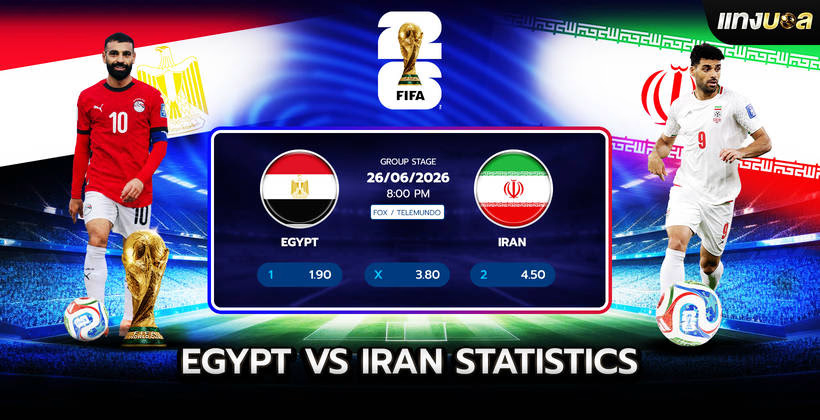
Egypt's current World Cup Standings and Performance Metrics are listed below.
- Group Stage Position: Egypt sits in Group A of the 2026 FIFA World Cup, competing alongside the United States, Portugal, and Panama across the group stage schedule.
- Wins, Draws, and Losses: Egypt records 1 win, 1 draw, and 1 loss across the current group stage fixtures, accumulating 4 points from 3 matches played.
- Goals Scored: Egypt scored 4 goals across group stage fixtures, averaging 1.3 goals per game, with Mohamed Salah contributing 2 of the 4 goals recorded.
- Goals Conceded: Egypt conceded 2 goals across group stage matches, maintaining a goal difference of +2 and recording 1 clean sheet from 3 appearances.
- Possession Average: Egypt averages 52% possession per game, reflecting an attack-minded structure built around Mohamed Salah's creative influence across all group stage fixtures.
- Shots per Game: Egypt averages 12 shots per game, with 5 shots on target per match, reflecting an aggressive and direct attacking output in the Egypt World Cup campaign.
How has Egypt's National Football Team Performed Recently?
Egypt's national football team recorded 14 wins, 4 draws, and 3 losses across the 2024 to 2025 international window. The squad secured a 2026 FIFA World Cup qualification spot, finishing 1st in the African qualifying group with 19 points from 8 matches. Mohamed Salah contributed 9 goals and 6 assists across the qualifying campaign, driving attacking output throughout the period. Defensive injuries disrupted squad consistency, with Ahmed Hegazi missing 4 competitive fixtures due to a hamstring strain. Egypt faced a difficult schedule against Morocco, Nigeria, and Senegal, recording 2 losses against the top-ranked African opposition. Omar Marmoush contributed 5 goals across the 2026 preparation window, reducing dependency on Salah's individual output in the Egypt national football team's recent fixtures.
What Tactical Formations are Egypt Expected to use in this Match?
Tactical formations Egypt is expected to use in this match are listed below.
- 4-3-3 Formation: Egypt's primary setup positions Mohamed Salah, Omar Marmoush, and Mostafa Mohamed across the attacking line, supported by a three-man midfield averaging 87% pass accuracy. The structure prioritizes wide attacking play and defensive compactness through disciplined pressing triggers.
- 4-5-1 Defensive Block: Egypt deploys a five-man midfield shape against high-possession opponents, compressing defensive lines to limit opposition space and reduce counter-attacking exposure. Tarek Hamed anchors the defensive midfield role, recording 5.2 ball recoveries per game within the structure.
- 4-2-3-1 Transitional Shape: Egypt transitions into a 4-2-3-1 setup during counter-attacking sequences, with Salah operating as the number 10 behind Mostafa Mohamed. The double pivot of Hamed and Elneny provides defensive balance, averaging 9.1 combined recoveries per game.
- High Press Trigger System: Egypt activates aggressive pressing sequences in the opponent's half, forcing turnovers within 6 seconds of losing possession across recent competitive fixtures. The press generated 14 high turnovers across the last 8 international matches, contributing to 5 goals from regained possession in the Egypt tactical formations approach.
How does Egypt Rely on a Single Playmaker to Control Match Tempo?
Egypt relies on Mohamed Salah as the single playmaker to control match tempo through positional intelligence and creative passing. Salah operates as a false winger, drifting centrally to dictate attacking sequences and receive the ball in deeper positions. The squad channels 68% of attacking buildup play through Salah's involvement, with the forward averaging 4.7 key passes per game. Egypt's attacking output drops from 1.8 goals per game to 0.6 goals per game when Salah is marked out, highlighting the squad's dependency on a single creative source. The concentration of creative responsibility within one player defines the tactical structure of the Egypt playmaker system across competitive international fixtures.
Is Egypt's Defensive Line Organized Enough to Contain Iran's Forwards?
Yes, Egypt's defensive line is organized enough to contain Iran's forwards. Egypt operates within a compact 4-3-3 defensive shape, conceding an average of 0.9 goals per game across the last 10 international fixtures. Ahmed Hegazi and Mohamed Abdelmonem anchor the center-back pairing, averaging 4.1 clearances and 3.8 interceptions per game, respectively. Tarek Hamed shields the backline from midfield, recording 5.2 ball recoveries per game against transitional attacks. Iran generates only 9 shots per game, with 4 on target, limiting high-danger chances against the Egyptian defensive line.
Which Players are Currently on Egypt 's National Team Roster?
Players currently on Egypt's National Team Roster are listed below.
- Mohamed El-Shenawy (Al Ahly, Goalkeeper): El-Shenawy serves as the first-choice goalkeeper for Egypt, known for commanding penalty-area presence and reflex shot-stopping. His domestic consistency with Al Ahly reinforces national team defensive stability.
- Mohamed Abou Gabal "Gabaski" (Zamalek, Goalkeeper): Gabaski provides experienced backup goalkeeping with strong positioning and aerial dominance. His penalty-saving record in competitive fixtures strengthens Egypt's depth between the posts
- Ahmed Hegazi (Al Ahly, center-Back): Hegazi anchors Egypt's defensive line with physical strength and aerial ability, averaging 4.1 clearances per game across recent international fixtures.
- Omar Kamal (Zamalek, Center-Back): Kamal delivers disciplined positional defending and strong one-on-one containment, contributing to Egypt's organized backline structure.
- Mohamed Abdelmonem (Al Ahly, Center-Back): Abdelmonem provides composure in defensive transitions, averaging 3.8 interceptions per game across competitive matches.
- Ahmed Fatouh (Pyramids FC, Right-Back): Fatouh operates as an attacking right-back, contributing 2 assists across the last 8 international fixtures through overlapping runs.
- Mahmoud Hamdy "El Wensh" (Zamalek, Left-Back): El Wensh delivers defensive solidity and positional discipline along Egypt's left flank, limiting opponent crossing opportunities.
- Tarek Hamed (Al Ahly, Defensive Midfielder): Hamed anchors Egypt's midfield with 5.2 ball recoveries per game, disrupting opposition buildup play through aggressive pressing.
- Amr El Sulaya (Al Ahly, Central Midfielder): El Sulaya contributes technical passing and midfield control, averaging 87% pass accuracy across recent international appearances.
- Mohamed Elneny (Besiktas, Central Midfielder): Elneny provides leadership and positional intelligence in midfield, accumulating over 100 international caps for the Pharaohs.
- Emam Ashour (Zamalek, Central Midfielder): Ashour delivers creative midfield play and pressing intensity, registering 3 assists across the last 10 competitive fixtures.
- Ahmed Sayed "Zizo" (Zamalek, Attacking Midfielder): Zizo operates as a dynamic attacking midfielder, contributing 4 goals and 3 assists across recent Al Ahly Derby and international appearances.
- Mohamed Salah (Liverpool, Right Winger): Salah leads Egypt's attacking line as the primary goal threat, averaging 0.6 goals per international appearance with over 55 goals across his national career.
- Mostafa Mohamed (Galatasaray, Center-Forward): Mostafa Mohamed serves as Egypt's primary striker, contributing 8 goals across the last 15 international fixtures through aerial dominance and clinical finishing.
- Omar Marmoush (Manchester City, Forward): Marmoush delivers pace and directness across Egypt's attacking line, registering 5 goals and 4 assists across recent competitive appearances.
- Ramadan Sobhi (Pyramids FC, Left Winger): Sobhi contributes creativity and dribbling ability along Egypt's left flank, averaging 2.3 successful dribbles per game in international fixtures.
- Trezeguet (Trabzonspor, Wide Forward): Trezeguet provides width and attacking versatility, contributing 3 goals across the last 12 international appearances for the Egypt national team roster.