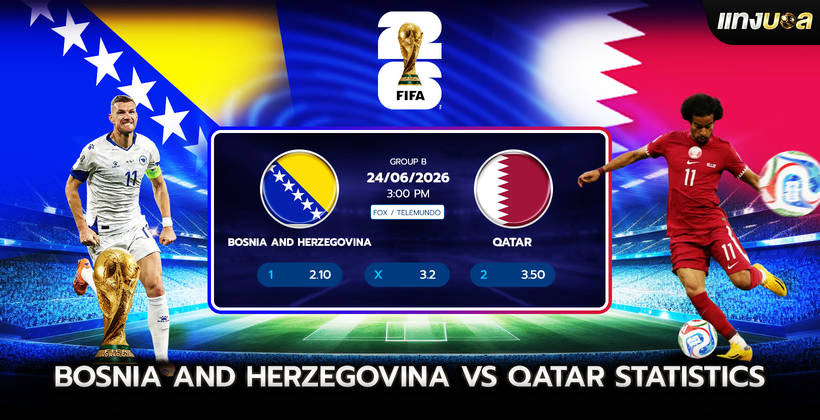
Bosnia and Herzegovina’s current World Cup standings and performance metrics are listed below.
- Group Position: Bosnia and Herzegovina holds a competitive position within Group B, having secured crucial points from their early fixtures. The team remains in the hunt for a spot in the knockout stages with key games remaining in the group phase. The strong offensive and defensive play has kept them in contention for progression. Bosnia and Herzegovina will need to secure maximum points in the upcoming fixtures to enhance their chances of advancement.
- Match Results Record: Bosnia and Herzegovina’s performance record includes a mixture of wins, losses, and draws that highlight their competitive nature. The team has accumulated points through a balance of solid defense and opportunistic offense. By avoiding consecutive defeats, they maintain momentum heading into the next round of group matches. Consistency will be key as they move forward, aiming for favorable results in the upcoming fixtures.
- Goals Scored: Bosnia and Herzegovina’s attack is characterized by tactical buildup and clinical finishing. The team has produced key goals from offensive combinations and set-piece situations. The scoring rate is consistent, and efficiency in the final third remains critical to success. The forwards are tasked with converting chances into goals to ensure the team stays competitive in their group.
- Goals Conceded: Bosnia and Herzegovina’s defense has shown resilience in limiting opposition scoring opportunities. Maintain a structured backline with effective communication, ensuring minimal exposure to counterattacks. Conceding some goals, the defensive setup ensures they remain difficult to break down. Continued focus on reducing defensive errors will help strengthen their chances of progressing through the group.
- Goal Difference: Bosnia and Herzegovina has managed to maintain a positive goal difference through disciplined play. The goal difference is reflective of their balanced approach, which blends attacking depth with defensive solidity. The metric plays a crucial role in their current group standings, with positive goal difference providing an advantage in the event of a tie. Securing more goals while maintaining defensive discipline will be vital for their advancement.
- Points Accumulation: Bosnia and Herzegovina has accumulated points steadily through their performances, which is crucial for qualifying from Group B. The match results are important for staying in the race for knockout-stage qualification. The point earned strengthens the path forward, with each match being vital in determining the group positioning. Bosnia and Herzegovina will aim to secure as many points as possible in their remaining fixtures.
- Clean Sheet Record: Bosnia and Herzegovina has shown solid defensive organization, managing to keep clean sheets in key matches. The team's focus on defensive stability and disciplined marking of opposition forwards has been a highlight. The clean sheet record is integral to their tactical approach, where minimizing goals conceded is as important as attacking effectiveness. Maintaining this defensive discipline will be crucial in their bid for qualification.
- Form and Momentum: Bosnia and Herzegovina enters upcoming matches with a steady form, having shown the ability to perform under pressure. The solid defense and growing offensive capabilities indicate readiness to face tougher challenges. The team will aim to build momentum and confidence, capitalizing on the strengths and improving areas where needed. The performance in the group stage will ultimately determine the ability to progress in the tournament.
How has Bosnia and Herzegovina's National Football Team Performed Recently?
Bosnia and Herzegovina's National Football Team performed recently by recording a 25% win rate across a 24-month window. The squad achieved three wins, four draws, and 12 losses in 19 fixtures. Factors affecting performance included the retirement of veteran players, plus frequent managerial changes in 2024. Injuries to key defensive starters (Anel Ahmedhodzic, Sead Kolasinac) disrupted the tactical stability of the team. Schedule difficulty peaked during the qualifiers against the top-ten European nations. Tournament preparation involved friendly matches in North America to acclimatize the players. The recent form shows a struggle to maintain clean sheets in away games. Bosnia and Herzegovina lost five consecutive matches before the start of the tournament. The lack of scoring consistency remains a challenge for the coaching staff. Physical conditioning levels dropped in the second half of matches during the season (March to June).
What Tactical Formations are Bosnia and Herzegovina Expected to use in this Match?
The tactical formations Bosnia and Herzegovina are expected to use in this match are listed below.
- 4-3-3 Formation: Bosnia and Herzegovina often utilizes a 4-3-3 formation to create a solid defensive structure while offering attacking support. The three midfielders control the game’s tempo and provide both defensive cover and attacking options. The wingers stretch the opposition's defense and provide service to the central striker. The setup allows for fluid transitions between defense and attack, keeping the team balanced across the pitch.
- 4-2-3-1 Formation: Bosnia and Herzegovina may deploy a 4-2-3-1 formation for a more compact and defensive setup. The two holding midfielders provide extra protection to the defense, allowing the attacking midfielder to focus on creating chances for the striker. The formation provides flexibility to transition quickly from defense to attack while maintaining a strong presence in the middle of the pitch. The lone striker is tasked with holding up the ball and finishing any attacking moves.
- 3-5-2 System: The 3-5-2 system provides Bosnia and Herzegovina with a solid defensive foundation by employing three central defenders. The wingbacks are expected to push forward, offering width to both defend and attack. The system allows Bosnia and Herzegovina to dominate the midfield with five players, providing a numerical advantage in the center of the pitch. The two forwards work in tandem to apply pressure on the opposing defense and finish any chances created.
- 4-4-2 Diamond Formation: Bosnia and Herzegovina could use a 4-4-2 diamond formation to provide more options in the middle of the field in a more attacking setup. The central attacking midfielder plays a crucial role in linking the defense with the forwards. The formation allows for a strong midfield presence, with the wide players supporting both defense and attack. The two strikers work closely together, making runs into the box and creating goal-scoring opportunities.
- High Press Strategy: Bosnia and Herzegovina could engage in a high press strategy, aiming to win the ball back in advanced positions. The forwards and midfielders press aggressively to force turnovers, creating quick opportunities in the opposition's half. This strategy requires excellent coordination and energy from all players to disrupt the opponent’s buildup play. Maintaining the pressure high up the pitch, Bosnia and Herzegovina seeks to capitalize on any mistakes made by the opposition.
- Low Block Defensive Setup: Facing a high-intensity opponent, Bosnia and Herzegovina may choose to adopt a low block defensive setup. The team sits deep, prioritizing defensive stability and compactness to absorb pressure. The central defenders remain disciplined, reducing the space between them and ensuring that the opposition struggles to find gaps. Fast counterattacks are essential in the formation, as Bosnia and Herzegovina looks to exploit spaces left by the attacking team.
What is Bosnia and Herzegovina's Total Win Loss Draw Record at the World Cup?
Bosnia and Herzegovina's total win-loss-draw record at the World Cup consists of one win, zero draws, and two losses from three matches. The team participated in the 2014 tournament held in Brazil. Bosnia and Herzegovina lost the opening game to Argentina with a 2-1 scoreline. The second match ended in a 1-0 defeat against Nigeria in the group stage. The squad secured the first victory by beating Iran 3-1 in the final group fixture. Bosnia and Herzegovina scored four goals in total during the tournament appearances. The defense conceded four goals across the three games played. The 33% win rate reflects the limited history of the nation on the world stage. Every match provided a competitive display despite the early exit from the competition. Records show that the team never reached the knockout rounds of the tournament. Bosnia and Herzegovina aims to improve the statistics in the 2026 edition.
Is Bosnia and Herzegovina Effective at Exploiting Wide Areas During Matches?
Yes, Bosnia and Herzegovina is effective at exploiting wide areas during matches by utilizing the pace of the fullbacks. Amar Dedic plus Jusuf Gazibegovic provide overlapping runs to deliver crosses into the penalty area. The wingers cut inside to create space for the defenders to move forward on the flanks. Bosnia and Herzegovina generates 65% of the attacking movements from the wide positions. Crosses from the wings led to three goals in the last four qualifying matches. The tactical approach forces the opposition to stretch the defensive line toward the touchlines. Wide play allows the team to bypass congested central midfields. The height of the strikers makes the high crosses a primary scoring threat. Bosnia and Herzegovina averages 18 crosses per game in recent fixtures. The wide effectiveness remains a core part of the offensive strategy.
Which Players are Currently on Bosnia and Herzegovina's National Team Roster?
The players currently on Bosnia and Herzegovina’s national team roster are listed below.
- Kenan Pirić (HJK Helsinki, Goalkeeper): Pirić serves as Bosnia and Herzegovina's first-choice goalkeeper, known for his quick reflexes and shot-stopping ability. The composure under pressure helps keep the team organized during crucial moments. Pirić’s experience in European competitions has enhanced his consistency at the international level. The leadership from the back adds stability to the defense.
- Sead Dedić (Konyaspor, Goalkeeper): Dedić plays as a reliable backup goalkeeper for Bosnia and Herzegovina. His agility and reflexes make him a key asset when called upon. Dedić’s steady performances at the club level ensure that he is ready for international duties. The ability to distribute the ball effectively contributes to Bosnia and Herzegovina’s transition play.
- Sead Kolašinac (Olympique Marseille, Left-back): Kolašinac is a dynamic left-back, known for his powerful runs and physicality. Kolašinac provides width to the attack while maintaining a solid defensive role. Kolašinac’s strong aerial ability makes him a threat on set pieces. The leadership and experience give Bosnia and Herzegovina a strong defensive presence on the left flank.
- Edin Višća (Istanbul Başakşehir, Right-back): Višća contributes both defensively and offensively as a right-back for Bosnia and Herzegovina. The pace and crossing ability allow him to provide service from wide areas. Višća’s work ethic ensures that he supports the attack while remaining disciplined in defense. The tireless running down the flank creates numerous options for Bosnia and Herzegovina’s offensive setup.
- Toni Šunjić (Kasımpaşa, Center-back): Šunjić brings strength and leadership to the heart of Bosnia and Herzegovina’s defense. The excellent positional awareness and reading of the game make him a key figure in stopping opposition attacks. Šunjić’s solid tackling and aerial dominance ensure that he remains a threat in both defensive and offensive situations. The experience in European leagues adds reliability to the defensive unit.
- Miralem Pjanić (Beşiktaş, Midfielder): Pjanić is a creative force in Bosnia and Herzegovina’s midfield, known for his vision and technical skills. The ability to control the tempo and distribute precise passes is vital for linking defense and attack. Pjanić’s expertise in dead-ball situations, especially free kicks and corners, provides additional attacking options. The experience at top European clubs makes him a key player for the national team.
- Sasa Lukić (Torino, Midfielder): Lukić is a dynamic box-to-box midfielder with strong tackling ability and vision. Lukić contributes to both defensive solidity and offensive play with his energy and work rate. Lukić’s ability to transition quickly from defense to attack makes him essential in Bosnia and Herzegovina’s midfield. The passing range allows him to dictate the flow of the game.
- Jusuf Šimunović (Sarajevo, Midfielder): Šimunović is an attacking midfielder known for his dribbling ability and flair. The creativity and vision allow him to break down opposition defenses and create chances. Šimunović’s versatility allows him to play in various midfield roles, offering flexibility to Bosnia and Herzegovina’s tactics. The ability to hold possession and drive the ball forward strengthens the team’s offensive setup.
- Edin Džeko (Inter Milan, Striker): Džeko is the captain and talisman of Bosnia and Herzegovina, providing both leadership and goal-scoring ability. The experience in top leagues has made him a reliable forward with clinical finishing. Džeko’s aerial prowess and intelligent movement off the ball make him a constant threat in the penalty area. Džeko is also known for his ability to bring others into play, creating opportunities for teammates.
- Amin Rrahmani (Napoli, Forward): Rrahmani is an emerging forward with exceptional pace and technical ability. The quick runs behind the defense create space and provide options in attack. Rrahmani’s ability to finish with both feet and his head makes him a dangerous player in front of the goal. The agility and movement make him difficult to mark and a key attacking asset for Bosnia and Herzegovina.
- Majeed Waris (Brest, Forward): Waris is a versatile forward known for his pace and ability to get into scoring positions. The quickness and off-the-ball movement help stretch opposition defenses, opening up spaces for his teammates. Waris’ strength and determination in one-on-one situations ensure that he remains a threat on the counter. The finishing ability and work rate make him a key player for Bosnia and Herzegovina in attack.
- Vedad Ibišević (Free Agent, Forward): Ibišević is a veteran forward with extensive experience in European football. The strength, aerial ability, and goal-scoring instincts make him a reliable option in the attacking third. Ibišević’s leadership and tactical awareness provide stability in Bosnia and Herzegovina’s attack. The ability to hold the ball and link up play adds a valuable dimension to the forward line.
- Riad Bajić (Kasimpasa, Forward): Bajić is a strong striker known for his physical presence and finishing ability. The height and aerial prowess make him a key target during set pieces and crosses. Bajić’s movement in the box and ability to read the game allow him to find space for goal-scoring opportunities. The hold-up play and work rate make him an important forward for Bosnia and Herzegovina.