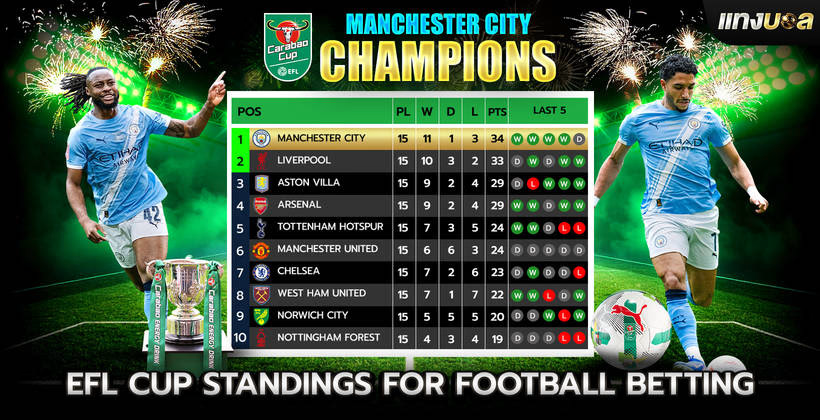
Read the EFL Cup table by understanding how each column reflects team performance across the competition. The number of matches played shows participation and provides the foundation for interpreting wins, draws, and losses. Wins indicate successful outcomes, while draws and losses reveal consistency or vulnerability in different fixtures. Goals for highlight attacking strength, whereas goals against measure defensive resilience. Goal difference combines attacking and defensive records to show balance across the team’s performance. Points summarize the effectiveness of results, with victories contributing more than draws. Home and away records reveal venue influence, showing whether a team performs better in familiar surroundings or in challenging away conditions. Clean sheets demonstrate defensive discipline by recording matches without conceding goals. Reading the table requires connecting each statistic to team form, momentum, and tactical reliability, creating a complete picture of progress in the EFL Cup.
Why is the EFL Cup table important for football betting?
The EFL Cup table is important for football betting because it provides measurable indicators of team performance across the competition. Wins, draws, and losses reflect consistency and momentum, which are critical factors in predicting outcomes. Goals for and goals against highlight attacking strength and defensive resilience, offering insight into scoring patterns. Goal difference combines offensive and defensive records, creating a balanced view of team efficiency. Points accumulated show the effectiveness of results and define the competitive position of each club. Home and away records reveal venue influence, demonstrating whether a team performs stronger in familiar surroundings or struggles in away fixtures. Clean sheets emphasize defensive discipline by recording matches without conceding goals, which directly impacts betting markets. The table connects statistical evidence with tactical reliability, making it a vital reference for evaluating probabilities in football betting.
How are teams ranked in the EFL Cup?
Teams are ranked in the EFL Cup through a structured points system that reflects performance across matches. Wins contribute three points, draws add one point, and losses provide no points, creating a clear hierarchy of success. Goal difference serves as a decisive factor when teams share equal points, with higher margins favoring stronger attacking and defensive balance. Goals scored offer an additional measure of offensive strength, while goals conceded highlight defensive resilience. Head-to-head records are considered when teams remain level after points and goal difference, ensuring fair comparison through direct encounters. Home and away records provide context for venue influence, showing whether consistency is maintained across different environments. Clean sheets strengthen ranking by demonstrating defensive discipline, as matches without conceding goals reflect tactical stability. The ranking system combines statistical evidence and competitive outcomes, producing a transparent order that defines progress in the EFL Cup.
What decides tiebreakers in the EFL Cup?
Tiebreakers in the EFL Cup are decided through a sequence of factors that ensure fairness and clarity in ranking. Points gained from wins and draws serve as the primary measure, with higher totals placing teams above rivals. Goal difference becomes the next deciding factor when teams share equal points, as a stronger balance between goals scored and goals conceded reflects superior performance. Total goals scored provide the next measure of equality, rewarding attacking strength across matches. Head-to-head records are considered, with direct results between tied teams offering decisive context. Extra time and penalty shootouts resolve ties, ensuring progression without ambiguity in knockout rounds. Clean sheets contribute indirectly by strengthening defensive records, which influence goal difference and stability. Each factor connects statistical evidence with competitive fairness, creating a transparent system for resolving ties in the EFL Cup.
Which EFL Cup positions qualify teams for European competitions?
The EFL Cup positions qualify for European competitions for the team that wins the tournament. The champion secures a place in the UEFA Europa Conference League, which provides international competition for the following season. No other positions in the EFL Cup (runner-up or semi-finalist) receive direct European qualification. The Conference League spot is passed to the next eligible Premier League team based on domestic standings, if the winning club has already qualified for a higher European competition through league performance. The structure ensures that the EFL Cup winner creates a pathway into Europe, while other positions remain dependent on league results rather than cup progression. The arrangement highlights the importance of winning the trophy, as it represents silverware and continental football access.
Does winning the EFL Cup grant a spot in the Europa League or Champions League?
No, winning the EFL Cup does not grant a spot in the Europa League or the Champions League. The winner of the EFL Cup earns a spot in the UEFA Europa Conference League, which is the third level of European tournaments. The chances for the Europa League and Champions League are decided by the Premier League standings and FA Cup results, not the EFL Cup. The Conference League spot goes to the next eligible Premier League team if the EFL Cup winner qualifies for a higher European competition through league position. It guarantees that winning the EFL Cup grants access to continental football, but it leads to the Europa Conference League rather than the more prestigious European tournaments.
What factors influence EFL Cup standings?
The factors that influence EFL Cup standings are points, goals, home and away records, and clean sheets, which reflect team performance across the competition. Points gained from wins and draws are the primary determinant, with victories contributing three points and draws adding one. Goal difference plays a decisive role when teams share equal points, as a higher margin between goals scored and goals conceded demonstrates stronger balance. Goals scored provide an additional measure of attacking strength, while goals conceded highlight defensive resilience. Head-to-head results influence standings when teams remain level after points and goal difference, offering direct comparison through previous encounters. Home and away records reveal venue impact, showing whether consistency is maintained across different environments. Clean sheets strengthen defensive credibility by recording matches without conceding goals, which directly supports ranking stability. Each factor connects statistical evidence with competitive outcomes, creating a transparent system that defines progress in the EFL Cup.
How do league standings impact teams?
League standings impact teams by defining their position in the competition and shaping future opportunities. Higher rankings provide benefits (qualification for continental tournaments, stronger financial rewards, and increased visibility) for players and managers. Lower positions create pressure through relegation risks, reduced sponsorship interest, and limited chances for growth. Points accumulated from wins and draws reflect consistency, while goal difference and goals scored highlight attacking and defensive balance. Strong standings influence player morale, as success builds confidence and attracts talent, while poor results generate uncertainty and demand tactical adjustments. Managers rely on standings to measure progress, evaluate strategies, and justify decisions to club leadership. Supporters view standings as a reflection of identity and pride, linking team success to community spirit. League standings are a comprehensive measure of performance, connecting statistical evidence with competitive outcomes and long-term stability.
How to Bet on Football in the EFL Cup?
To bet on football in the EFL Cup, there are seven steps to follow. First, create an account on Ufabet, which establishes a reliable platform for placing wagers. Second, select an EFL Cup match, where factors (team form, goal difference, and head-to-head records) guide the choice. Third, choose a betting market (match result, over or under goals, or both teams to score), each offering distinct benefits depending on statistical evidence. Fourth, focus on analyzing odds, where values reflect risk levels and potential returns. Fifth, place the wager and confirm the stake amount, ensuring clarity in the betting slip. Sixth, monitor the match, where live updates provide context for in-play betting opportunities. Lastly, concludes with settlement, where winnings are credited based on accurate predictions. Each stage connects preparation, analysis, and execution, creating a complete process for the EFL Cup betting through Ufabet.
How does Ufabet’s Live Betting work for EFL Cup Matches?
Ufabet’s live betting works for EFL Cup matches through real-time updates that allow wagers to be placed while the game is in progress. The platform provides live score tracking as the primary basis for betting decisions, with information displayed in a clear and structured format. Live video feedback is available for selected fixtures, offering direct viewing alongside betting markets, while matches without broadcast rights rely on detailed scoreboards and statistical feeds. Accuracy of information is maintained through official data providers, ensuring that updates reflect actual match events (goals, cards, and possession changes). Minor delays occur due to data transmission, but the system is designed to synchronize quickly with official match reports to maintain reliability. The combination of live scores, occasional video coverage, and rapid updates creates a dependable environment for betting during EFL Cup fixtures.